What Is a Clay Bar? (And Why Does It Matter?)
If you've heard the term "clay bar treatment" but aren't sure what it actually does, you're not alone. It sounds technical, but the concept is straightforward — and understanding it helps explain why it's one of the most impactful services in the detailing world.
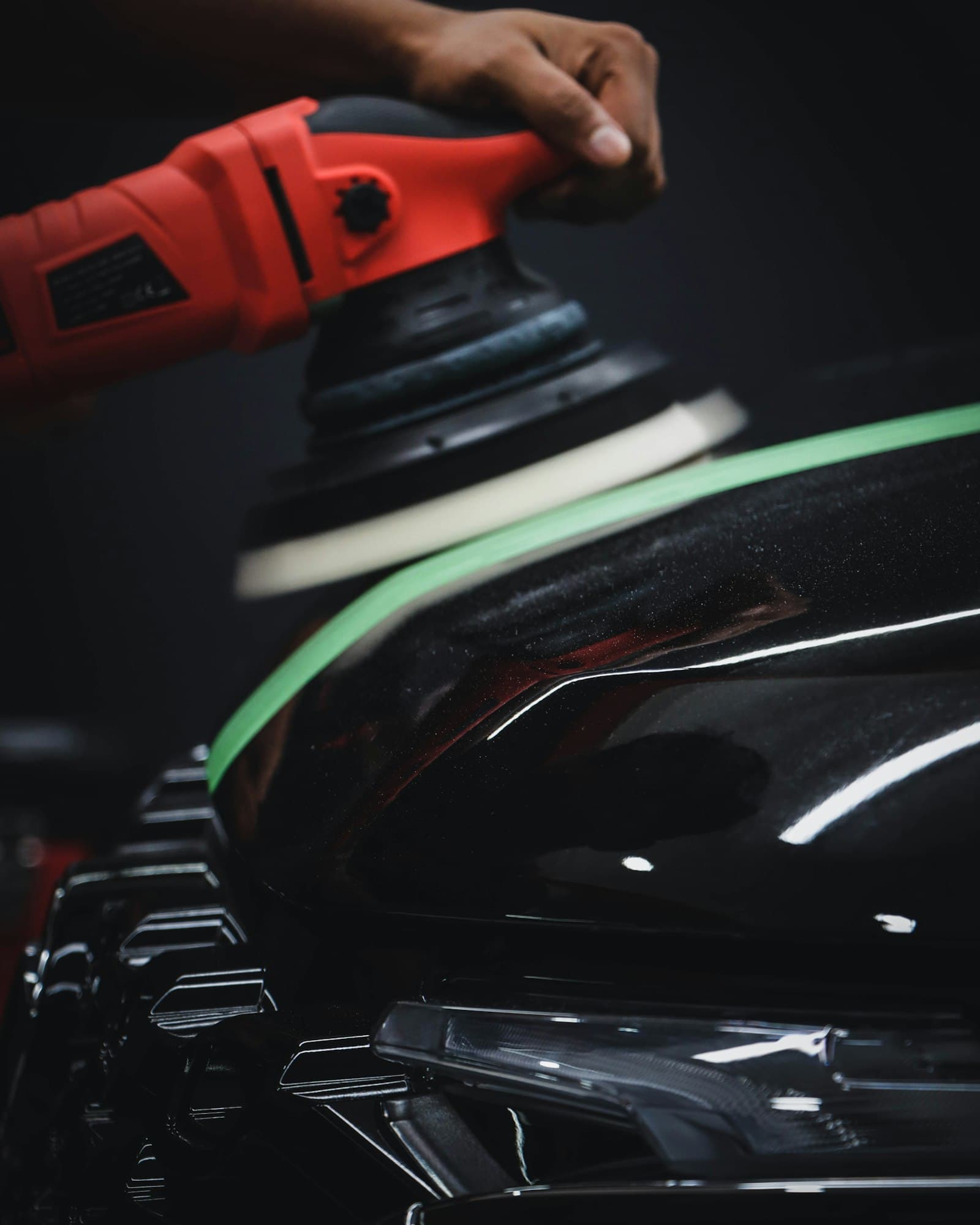
A clay bar is a soft, malleable synthetic clay compound that, when lubricated and rubbed across a painted surface, physically picks up and removes microscopic contaminants embedded in or bonded to the paint surface. These contaminants are too small to see with the naked eye but large enough to feel — and they can't be removed by washing, waxing, or polishing alone.
What Clay Bar Removes
Clay bar treatment is specifically designed to remove bonded surface contaminants — things that have embedded themselves into the clear coat beyond what washing addresses:
Industrial fallout: Airborne metal particles from traffic, manufacturing, and port activity. In Oahu, this is common near Pearl Harbor's industrial waterfront and along the H-1 corridor. These particles bond to paint and oxidize, leaving rust-colored specks.
Rail dust: Fine iron particles deposited from vehicles with cast iron brake systems. These embed in paint and rust, causing the orange speckling commonly mistaken for paint damage.
Salt mineral deposits: Salt air doesn't just sit on the surface — mineral components bond to clear coat in ways that washing doesn't remove. This is particularly relevant for Oahu coastal vehicles.
Tree sap: Bonded tree resin that washing leaves behind. Common under the large canopy trees of Manoa, Kailua, and Kaneohe.
Brake dust overspray: Fine brake dust that settles on lower body panels and bonds with heat.
Overspray: Paint or lacquer particles from nearby painting activity — less common but occasionally an issue.
The "Rough Paint" Test
Here's how to know if clay bar treatment is overdue: after washing and drying your vehicle, place your hand in a plastic sandwich bag and run it across a painted panel. If the surface feels slightly rough, gritty, or like fine sandpaper, you have bonded surface contamination. A truly clean, properly decontaminated surface feels glass-smooth.
Most Oahu vehicles fail this test within 4–8 weeks, depending on their location and use.
Why Clay Bar Must Come Before Wax or Sealant
This is where the technical understanding really matters:
Wax doesn't clean — it protects. Applying wax to a contaminated surface doesn't remove the contamination — it seals it into the paint under the wax layer. The wax bonds over and around the contaminants, trapping them. The result is:
Clay bar removes contaminants before wax or sealant goes on, ensuring the protective coating bonds directly to clean clear coat for maximum durability and clarity.
The Professional Clay Bar Process
At Net Automotive Detailing, the process involves:
How Often Does Oahu Require Clay Bar Treatment?
Given Oahu's combination of salt air, industrial fallout near the port and freeway corridors, and organic debris from tropical vegetation, we recommend clay bar treatment:
Get Clay Bar Treatment on Oahu
Net Automotive Detailing provides mobile clay bar decontamination anywhere on Oahu. We come to you — your driveway, your office, anywhere you park. Request your free quote today.