
The Wheel Problem That Sneaks Up on You
Wheel damage from brake dust is one of those vehicle maintenance issues that's almost invisible in real-time and then suddenly obvious when it's become a serious problem. Unlike a door ding or a paint scratch, brake dust damage develops gradually over months — by the time wheels look significantly damaged, the process has been underway for a long time.
Understanding what brake dust actually does helps explain why regular rim detailing is genuinely protective maintenance rather than just an aesthetic service.
What Brake Dust Actually Is
When you apply your brakes, friction material from your brake pads contacts the brake rotor. This generates fine particles of:
These particles become airborne in the wheel well area and, being hot from the friction process, embed themselves into the wheel surface before cooling and bonding. This is why simple rinsing doesn't remove brake dust — it's bonded, not just sitting on the surface.
What Brake Dust Does to Your Wheels
Phase 1 (Fresh deposition): Brake dust appears as a dark gray or brownish coating on the wheel face and inner barrel. At this stage, a standard wheel cleaner and brush removes most of it relatively easily.
Phase 2 (Days to weeks without cleaning): The iron particles in brake dust begin to oxidize — rusting in place. The dust coating takes on a reddish-brown tinge. It becomes significantly harder to remove with standard cleaners, requiring iron-dissolving chemistry.
Phase 3 (Weeks to months without cleaning): Baked-on brake dust, in Hawaii's heat, bonds firmly to wheel finishes. The iron continues oxidizing and begins to etch into the wheel surface. On polished alloys, this creates micro-pitting. On painted wheels, it begins compromising the clear coat over the paint.
Phase 4 (Months to years without treatment): Permanent pitting on alloy wheel faces. Clear coat failure on painted wheels leading to rust and discoloration. Chrome wheels develop rust spots beneath the chrome layer that cause bubbling and peeling.
At Phase 4, restoration requires wheel refinishing or replacement — expensive outcomes that regular cleaning prevents entirely.
Why Oahu Makes Brake Dust Worse
Heat: Oahu's warm climate means brake dust bakes onto wheel finishes faster than in cooler climates. The thermal bonding that makes brake dust so stubborn is accelerated by Hawaii's ambient temperatures.
Salt air: Salt air accelerates iron oxidation. Brake dust that's already iron-rich becomes even more aggressively oxidizing when salt air is present. For vehicles in Pearl City, Honolulu, Aiea, and coastal communities, brake dust and salt air are a particularly damaging combination.
Commuter driving patterns: Heavy traffic with frequent stop-and-go braking generates more brake dust than highway driving. Oahu's H-1 and H-2 corridors with significant traffic create high brake dust generation rates for commuter vehicles.
The Professional Rim Detailing Process
At Net Automotive Detailing, our wheel detailing process is designed to address brake dust at all stages:
1. pH-balanced wheel cleaner application: Breaks down fresh and lightly bonded brake dust. Safe for all wheel finish types.
2. Iron-dissolving fallout remover: A spray-on chemistry that targets iron particles specifically — the active ingredient actually turns purple/red as it reacts with iron oxide. This dissolves bonded iron particles that standard cleaners can't touch.
3. Brush cleaning: Dedicated wheel brushes for barrel access, spoke cleaning, and lug nut areas. The barrel (inside the wheel) is where brake dust concentrates most — and where most quick wheel washes don't reach.
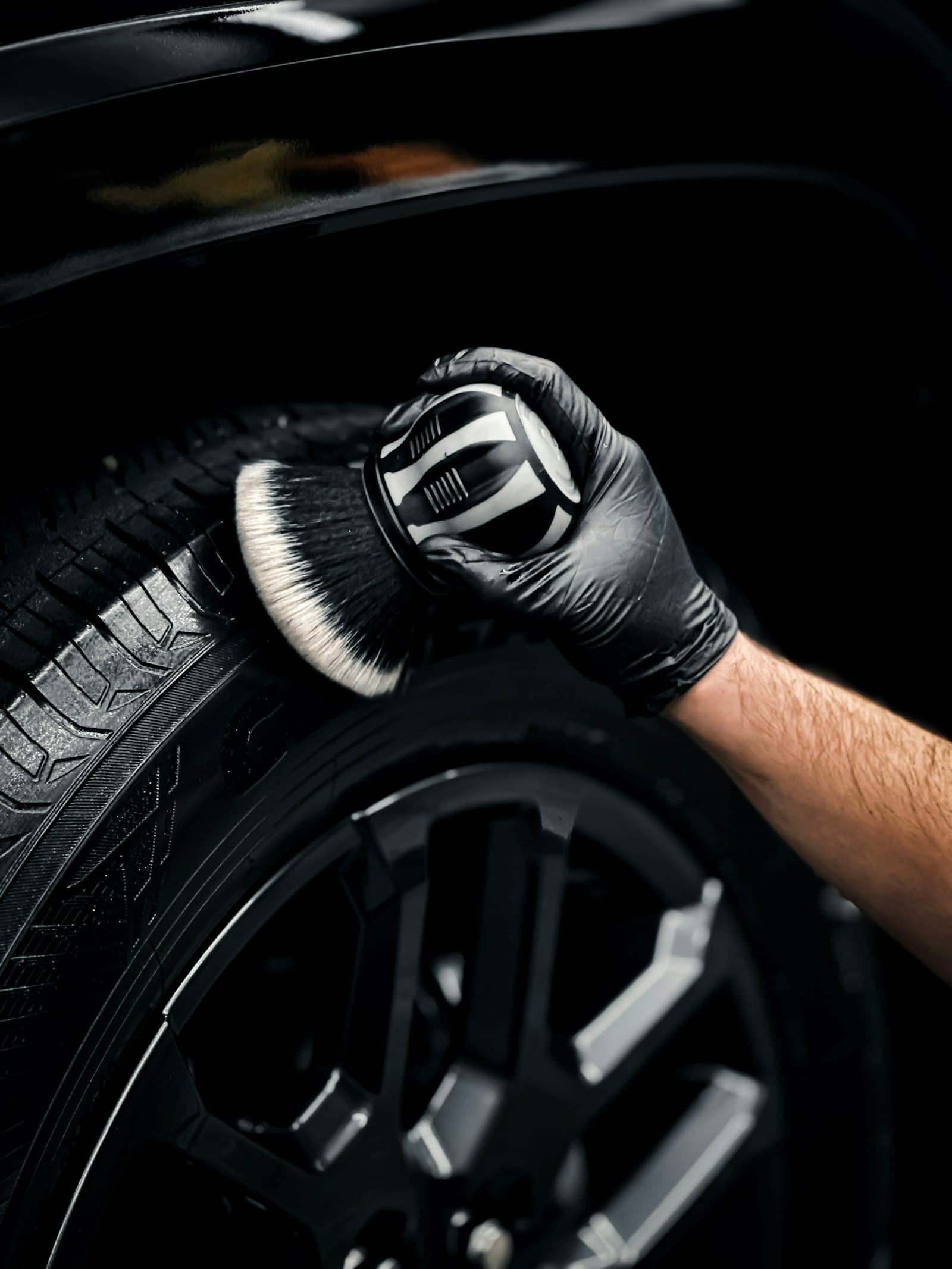
4. Tire scrubbing: Sidewall cleaning removes road grime, brake dust overspray, and rubber oxidation before dressing.
5. Wheel face final wipe: Ensures even removal and inspects for any remaining contamination.
6. Tire dressing: Gives tires a finished, professional appearance.
7. Optional sealant: A wheel-specific sealant makes future brake dust removal easier by preventing deep bonding.
How Often Should Wheels Be Detailed on Oahu?
For most Oahu drivers: monthly, as part of a regular exterior detail service.
For heavy commuters (Pearl City, Mililani, Honolulu): monthly minimum; every 3 weeks is better given brake dust generation rates.
For vehicles near salt air: same 3–4 week schedule — salt accelerates the iron oxidation process.
Book Rim Detailing on Oahu
Net Automotive Detailing provides professional mobile rim and wheel detailing anywhere on Oahu. Request your free quote today and protect your wheels before brake dust makes that decision costly.