What Interior Car Cleaning on Oahu Actually Involves
Interior car cleaning on Oahu means more than a quick vacuum and a wipe of the dash. A proper interior detail removes the fine sand worked deep into your carpet, lifts the sunscreen and sweat that soak into seats, cleans the dust and film off every hard surface, clears the glass, and deals with the musty odors that build up in a closed car in humid weather.
If you want the short answer: a professional interior detail is a top-to-bottom cleaning of the cabin, usually taking a few hours depending on the size and condition of the vehicle. Most owners can keep a car tidy between visits with a good vacuum and a microfiber towel, but the deep work (extraction, steam, stain treatment, odor removal) is where professional tools make a real difference.
The rest of this guide walks through why island interiors get dirty the way they do, what each step of a professional cleaning does, what you can realistically handle yourself, and how often it makes sense to book.
Why Island Interiors Get Dirty Differently
The same car driven in a dry mainland suburb and on Oahu will look very different after six months. A few local factors do most of the damage.
Sand. Beach sand is fine, sharp and heavy. It sinks below the carpet pile where most household vacuums can't lift it, and every time you step on it, it grinds against the fibers like sandpaper. A car that makes regular trips to Waimanalo, Ala Moana Beach Park or the North Shore will carry sand in the footwells, seat tracks and trunk for months.
Humidity and rain. Moisture is the biggest difference between island and mainland interiors. Wet towels, damp shoes, rain coming in through an open window and the general humidity on the windward side all feed mildew and musty smells. A car that sits closed in a Kaneohe or Manoa driveway does not dry out the way it would in a desert.
UV. Strong year-round sun dries out and fades dashboards, door panels and leather. Dust and body oils left on those surfaces make the problem worse.
Sunscreen, sweat and salt. Sunscreen is oily and transfers to seats, steering wheels and door handles. Sweat and salt water leave residue in fabric that can turn into stains and odors.
Red dirt. Hiking trails and unpaved roads leave iron-rich red soil on floor mats and carpet, and it stains if it's left to set.
None of this is unusual for island life. It just means an interior here benefits from a more thorough cleaning than a quick pass at a car wash.
The Professional Process, Step by Step
Every detailer has their own routine, but a complete interior detail generally follows the same logic: remove the dry debris first, then clean wet, then protect and finish. For a deeper walkthrough of each stage, see our post on what's included in a full interior detail.
1. Remove Loose Items and Floor Mats
Mats come out so they can be cleaned separately and so the carpet underneath is fully exposed. This is also when the detailer looks for problem areas: stains, pet hair, odors and any spots that feel damp.
2. Thorough Vacuum and Debris Removal
A professional vacuum with crevice and brush attachments works the carpet, under and between the seats, the seat tracks, the trunk and the door pockets. On island cars this step often takes longer than people expect, because sand has to be agitated loose before it can be pulled out.
3. Steam Cleaning Car Interior Surfaces
Steam cleaning a car interior uses heat and a small amount of moisture to loosen grime from upholstery, door panels, the headliner and hard plastics. It is useful for breaking up sticky residue, body oils and built-up film in textured surfaces without soaking anything. The headliner in particular needs a light touch, because the adhesive behind it can let go if it gets too wet.
4. Deep Cleaning Carpets and Cloth Seats
When stains or odors have set into fabric, a vacuum and steam may not be enough. Carpet shampoo and seat shampoo use hot-water extraction: a cleaning solution is worked into the fibers and then pulled back out along with the dirt it loosened. Extraction is the best way to remove what's embedded below the surface, including sweat, spilled drinks and the source of many lingering smells.
5. Hard Surfaces, Vents and Cup Holders
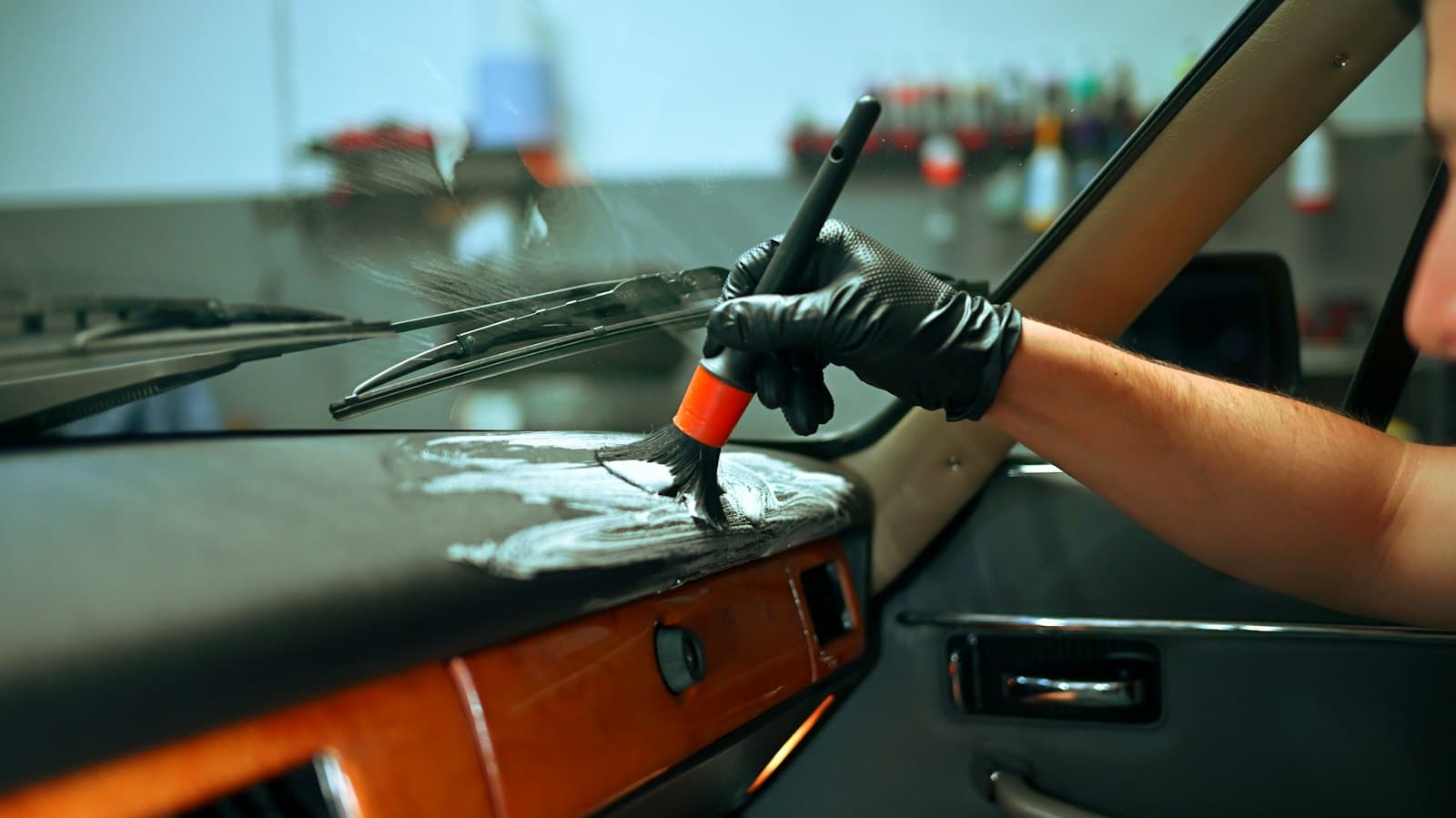
The dashboard, center console, steering wheel, door panels and cup holders are cleaned with products suited to each material. Vents and seams get detailed with brushes so dust doesn't just get pushed deeper.
6. Interior Glass
Interior glass collects a film from plastics, smoke, breath and fingerprints. Cleaning it properly, streak-free, makes a noticeable difference in glare when driving into the morning or late-afternoon sun.
7. Leather Care and Odor Treatment
Leather is cleaned with a pH-balanced product and then conditioned so it doesn't dry out in the heat. Leather conditioning is especially worthwhile for cars parked outside. An odor treatment finishes the job, which matters most in cars that have been carrying wet gear or pets.
What You Can Do Yourself
Plenty of interior care is perfectly manageable at home, and keeping up with it makes every professional cleaning faster and more effective.
Where DIY Hits Its Limits
The honest limitation of DIY interior cleaning is not effort, it's equipment and drying. Household vacuums often don't have the suction to pull fine sand from carpet backing. Spray-on upholstery cleaners can lift a stain to the surface but leave soap and moisture in the foam beneath it, which can cause rings or a mildew smell a few days later in humid weather.
A professional detail makes sense when:
How Often Should You Book Car Interior Detailing on Oahu?
There's no single schedule that fits everyone, but a reasonable starting point for car interior detailing on Oahu looks like this:
If the interior smells musty, feels gritty underfoot, or the seats look darker than they used to, that's usually the sign it's time.
Interior Car Cleaning in Honolulu and Beyond
Interior car cleaning in Honolulu has its own wrinkle: many people live in condos and park in shared structures where there's no space to pull everything out and work. That's one reason mobile detailing has caught on here. Net Automotive Detailing comes to your home, office or workplace anywhere on the island, so your car is cleaned where it's already parked, subject to any rules your building has.
Frequently Asked Questions
How long does a professional interior car cleaning take?
Most interior details take about 2 to 4 hours, depending on vehicle size and condition. A heavily soiled SUV, or a car that needs carpet and seat shampoo, can take longer.
Is steam cleaning safe for a car interior?
Yes, when it's done with the right technique. Steam works well on upholstery, door panels and hard plastics. Delicate areas like the headliner and electronics need a light touch so they don't get too much heat or moisture.
How long do carpets and seats take to dry after shampooing?
On Oahu, plan on several hours. Humidity slows drying, so leaving the windows cracked and parking in a shaded, ventilated spot helps.
Can I just vacuum instead of booking a detail?
Regular vacuuming is a great habit and keeps a car in good shape. It won't remove stains, embedded sweat and sunscreen, or the source of musty odors, which is what a deeper cleaning is for.
Book Your Interior Cleaning
Whether your car needs a full reset after months of beach days or regular upkeep, Net Automotive Detailing brings professional interior cleaning to you anywhere on Oahu. Every quote is based on your vehicle's size, condition and the services you need, and every job is backed by our satisfaction guarantee.
Or call us directly at (808) 777-8964. We serve all of Oahu, by appointment, seven days a week.