The Short Answer on Car Seat Cleaning on Oahu
Car seat cleaning on Oahu comes down to two questions: what your seats are made of, and what got on them. Cloth seats absorb spills, sweat and sunscreen into the fabric and the foam underneath, so they need cleaning that removes residue rather than just wiping the surface. Leather seats don't absorb as much, but they dry out and crack in the heat if they're cleaned with the wrong products and never conditioned.
For light, fresh spills, careful DIY cleaning works well. For set-in stains, seats that smell when the car heats up, or seats that have been wet, a professional car seat shampoo with hot-water extraction is usually the most reliable fix.
First, Know Your Upholstery
Before you put anything on a seat, figure out what you're working with. Your owner's manual will tell you, and so will a close look.
If you're weighing the two for your next car, our post on leather vs cloth in a tropical climate covers the trade-offs.
The Stains We See Most on Oahu
Island life leaves its own particular marks on car seats.
Sunscreen. Sunscreen is oily, and it transfers from backs, shoulders and legs onto seat backs and bolsters. On light fabric it can leave a yellowish or darkened patch, and it attracts dirt over time. Because it's oil-based, plain water won't lift it.
Coffee and drinks. Coffee, tea and sweet drinks contain tannins and sugars that stain and get sticky. Iced drinks also drip condensation onto the seat, which adds moisture.
Shoyu and plate-lunch spills. Shoyu is dark and salty, and poke and plate lunches often bring oil along with it. That combination of color, salt and grease is why a dropped poke bowl can leave a stubborn mark.
Sweat. Sweat carries salts and body oils into the fabric. It's rarely visible at first, but over months it shows up as darker areas where you sit and as a smell that gets stronger on hot days.
Sand. Sand doesn't stain, but it works deep into the weave and abrades the fabric every time someone sits down. It should always be removed before any wet cleaning, or you just end up with wet sand in the seat.
How to Clean Car Seats (Fabric): A Step-by-Step DIY Method
If you want to try cleaning cloth seats yourself, this method works for most fresh or light stains.
For sunscreen and other oily stains, a cleaner formulated for grease usually works better than a general-purpose product, but always test first.
How to Clean Leather Seats
Leather needs a gentler approach.
Avoid all-purpose cleaners, dish soap, and anything alcohol-based on leather; they strip the finish and speed up drying and cracking. Our leather conditioning service is built around this cleaning and conditioning routine.
Where DIY Seat Cleaning Falls Short
DIY works for maintenance and fresh spills. It struggles in a few situations:
What Professional Car Seat Shampoo Involves
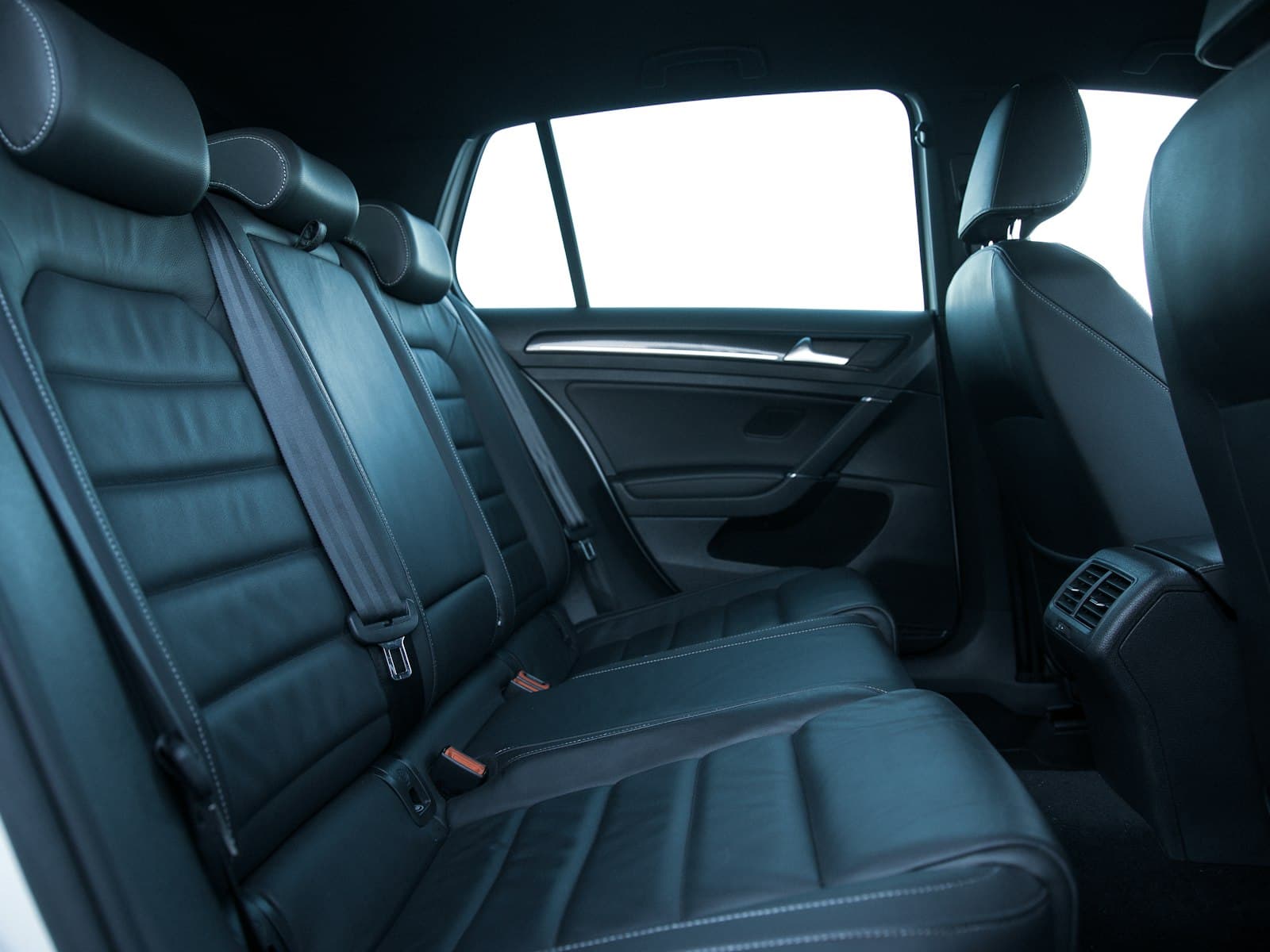
A professional car seat shampoo starts with a thorough vacuum, then targeted pre-treatment of each stain, then hot-water extraction across the fabric surfaces. The extractor works the cleaning solution into the fibers and immediately pulls it back out, along with the dirt, oils and residue it loosened. Seams and crevices get extra attention, and an odor neutralizer finishes the job.
The key advantage over a spray bottle is that extraction removes the dirty solution instead of leaving it in the cushion. That's what keeps seats from developing rings, stiffness or a damp smell afterward. Seat shampoo pairs naturally with an interior detail if the rest of the cabin needs attention too.
Don't Forget Seat Belts, Headrests and Armrests
Seat cleaning isn't just the cushions. Seat belts absorb sweat and sunscreen too, and when a damp belt retracts into its housing it can start to smell. Pull the belt all the way out, wipe it with a mild cleaner on a microfiber, and leave it extended until it's fully dry. Don't soak belts or use harsh chemicals on them, since the webbing is a safety component.
Headrests collect hair oil and sunscreen from the back of your head and neck, and armrests and the outer bolsters take the most contact when you climb in and out. These are often the first places a seat starts to look dark or shiny, so give them a little extra attention whenever you clean.
A Note on Children's Car Seats
Some people searching for car seat cleaning in Hawaii are looking for help with a child safety seat. Those have their own rules. Many manufacturers specify which parts can be washed and how, and some warn against harsh chemicals or soaking the harness straps, since that can affect how they perform in a crash. Always follow the instructions in your child seat's manual.
Keeping Seats Clean Between Cleanings
Frequently Asked Questions
How long do car seats take to dry after shampooing?
Usually several hours. In Oahu's humidity, drying takes longer, so park in a shaded, ventilated spot with the windows cracked.
Can you shampoo leather seats?
Leather shouldn't be shampooed like cloth. It's cleaned with a pH-balanced leather cleaner and then conditioned, which is a separate process from fabric seat shampoo.
What removes sunscreen stains from car seats?
Sunscreen is oil-based, so a cleaner formulated to break down grease works better than water or a general-purpose spray. Test it in a hidden area first and don't over-wet the seat.
Will seat shampoo get rid of odors?
Extraction removes much of what causes odor, such as sweat, spills and residue in the fabric. Odors that have soaked deep into the cushion can be harder to remove completely.
Get Your Seats Looking and Smelling Fresh
If your seats are carrying months of sunscreen, sweat and spills, Net Automotive Detailing can clean them at your home or workplace anywhere on Oahu. Your quote depends on your vehicle's size, condition and the services you need, and our work is backed by a satisfaction guarantee.
Or call us directly at (808) 777-8964. We serve all of Oahu, by appointment, seven days a week.