What Are Water Spots on Car Paint?
Water spots on car paint are the dull rings and dots left behind when water evaporates on the surface. Water isn't pure. It carries dissolved minerals, and often dust, salt or other contaminants. When the water dries, the water leaves, but everything dissolved in it stays behind on your paint and glass.
Most water spots can be removed safely at home if you catch them early. The key is figuring out which type you're dealing with:
Here is how to tell them apart, how to remove water spots from car paint and glass, and how Oahu drivers can stop them from coming back.
Where Water Spots Come From in Hawaii
Sprinklers
Sprinklers are one of the biggest culprits. A car parked next to a lawn, at the edge of a condo lot or near landscaping gets sprayed again and again, and each cycle leaves another layer of minerals. Irrigation water can also carry soil and fertilizer residue. These hard water spots on a car build up layer upon layer and are often the toughest to remove.
Washing in the sun
Washing a car in direct sun, or on a hot panel, makes water evaporate before you can dry it. On a sunny Oahu afternoon, a rinse can dry into spots in minutes. Soap drying on paint leaves its own residue too.
Rain and windward showers
Rain itself is relatively soft, but it picks up dust, pollen and salt from the air and from your car's surface. Frequent passing showers on the windward side, followed by sunshine, create repeated wet-dry cycles. Our Kaneohe windward detailing tips post goes into how that rain affects cars.
Salt spray
Near the ocean, mist and spray deposit salt that dries into spots. Salt water spots are also corrosive over time, which is another reason coastal cars need regular washing.
Letting the car air-dry
Even with good water, letting the car drip dry after a wash leaves spots. Drying with a clean microfiber towel or a blower is part of a proper wash.
The Three Types of Water Spots
Type 1: Surface deposits
These are fresh mineral deposits sitting on top of the paint. They look like light, chalky rings and often come off with a regular wash or a quick detailer spray. If you can feel nothing when you run a clean fingertip over the spot, and it disappears with a wash, it was Type 1.
Type 2: Bonded mineral deposits
When deposits sit through repeated wet-dry cycles and heat, they harden and bond to the surface. A normal wash doesn't touch them. You'll see crisp rings that remain after washing and drying. Most stubborn water spots on car paint fall into this category, and they usually respond to a dedicated water spot remover or a mild acidic solution.
Type 3: Etching
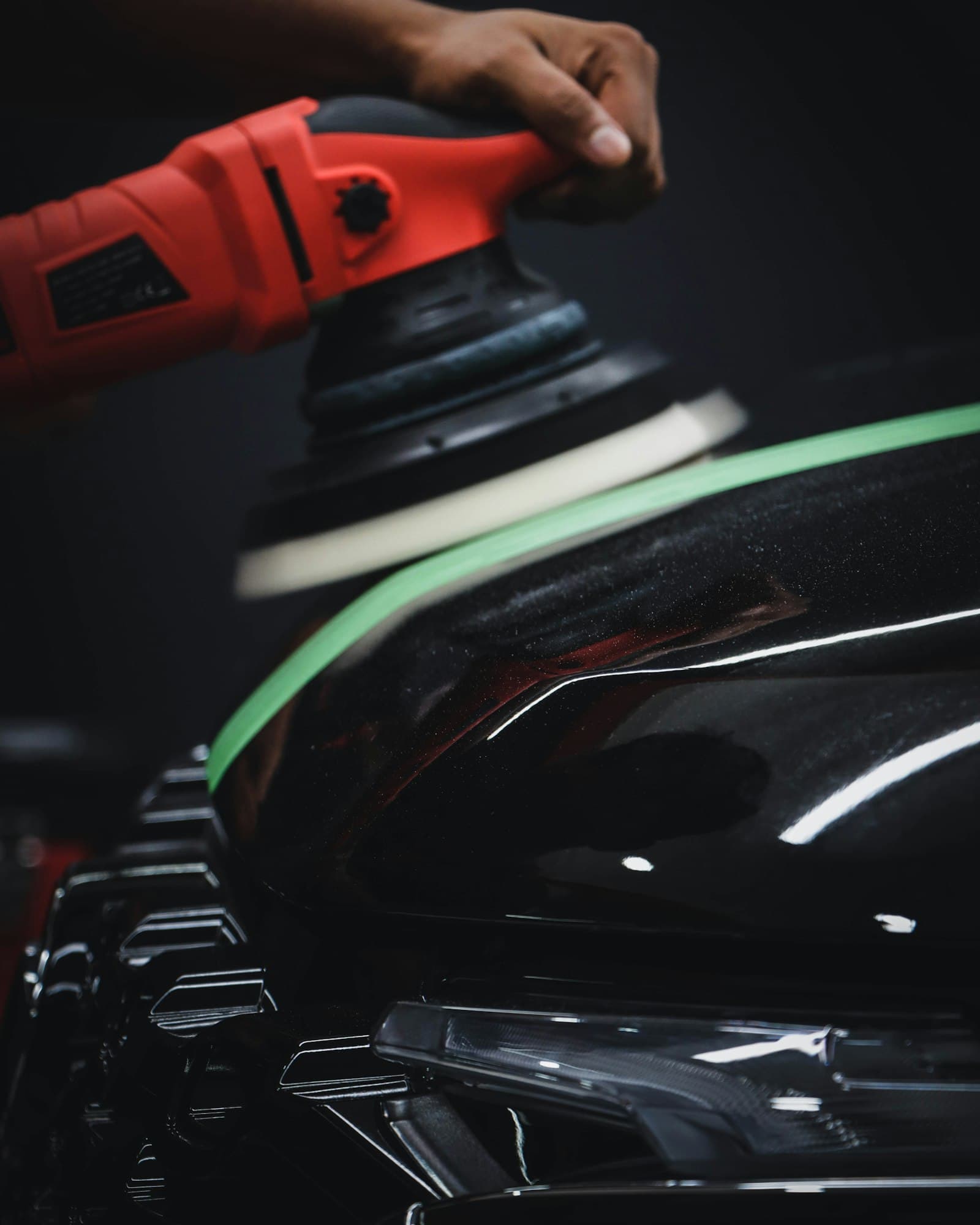
Minerals and contaminants, combined with heat, can eventually eat into the clear coat itself. Etched spots look like small craters or rings that remain even after the surface is fully clean and decontaminated. Under good light you may be able to see the outline as a slight depression. Chemical removers can't fix etching, because the damage is physical. It requires machine polishing to level the clear coat, which is paint correction work. We can help you tell whether you're dealing with deposits or etching, and correct it if it's etched.
How to Remove Water Spots From Car Paint
Always start with the gentlest method and work up. Work in the shade, on cool panels, one small section at a time.
Step 1: Wash and dry properly
Hand wash the car using the two-bucket method, rinse and dry thoroughly with clean microfiber towels. Many Type 1 spots disappear here.
Step 2: Try a diluted vinegar solution
For spots that remain, a common DIY approach is a solution of distilled white vinegar and distilled water, often mixed half and half. The mild acid helps dissolve mineral deposits. Spray it on a microfiber towel, gently wipe the spot, then rinse or wipe the area clean with water. Don't let it dry on the paint, don't use it in the sun, and test it on a small area first. Rinse it off promptly, especially around trim.
Step 3: Use a dedicated water spot remover
Automotive water spot removers are formulated to dissolve mineral deposits safely on clear coat. Follow the product directions closely, work in small sections and neutralize or rinse as directed.
Step 4: Clay the surface
If the paint still feels rough or the spots remain, a clay bar with plenty of lubricant can lift bonded deposits along with other contamination. Our clay bar treatment is designed for exactly this kind of decontamination, and our clay bar explainer shows how it works.
Step 5: Protect the paint
Once the surface is clean, apply wax or sealant. A protected surface makes water bead and roll off instead of sitting flat, so fewer spots form and the ones that do form are easier to remove. Our exterior spray wax adds that protective, water-beading layer.
If the spots won't budge
If spots remain after a proper wash, a water spot remover and clay, they're likely etched. At that point, the fix is polishing, which is what paint correction does. Scrubbing harder or using stronger chemicals will only risk damaging the paint.
What not to do
Water Spots on Car Windows
Water spots on car windows are common and especially annoying because they scatter light and make glare worse when you drive into the sun or at night.
Side windows near sprinklers tend to be the worst. If one side of your car is always worse, look at where you park.
Preventing Water Spots in Hawaii
Our exterior detail includes a two-bucket hand wash, hand drying with microfiber towels and exterior window cleaning, which keeps spots from forming in the first place. How often you need it depends on where you park; our post on how often to get an exterior detail in Hawaii can help you decide.
Frequently Asked Questions
Are water spots permanent?
Not usually. Surface and bonded mineral deposits can be removed with washing, water spot removers or clay. Only etched spots, which have eaten into the clear coat, are permanent without polishing.
Does vinegar remove water spots from car paint?
Diluted white vinegar can dissolve light mineral deposits. Use it in the shade on cool paint, test first, wipe gently and rinse it off. Don't let it dry on the surface.
How do I remove hard water spots from car windows?
Start with glass cleaner, then a vinegar solution or glass water spot remover, then clay if needed. Etched glass requires professional glass polishing.
How do I prevent water spots on my car?
Avoid sprinklers, wash in the shade, dry the car immediately with microfiber towels and keep wax or sealant on the paint so water beads off.
Get Rid of Water Spots for Good
If sprinklers or rain have left your paint and glass looking dull, we can help get it clean, decontaminated and protected. Quotes depend on your vehicle's size, its condition and the services you choose.
Or call us directly at (808) 777-8964. We serve all of Oahu, by appointment, seven days a week.